

India’s Digital Personal Data Protection (DPDP) Rules are live with a phased roadmap—digital first enforcement, predictable timelines, and an interoperable consent ecosystem. This is more than compliance; it’s how India Inc. signals global grade trust to investors and partners.
1) A Clear Roadmap: Predictability Drives Confidence
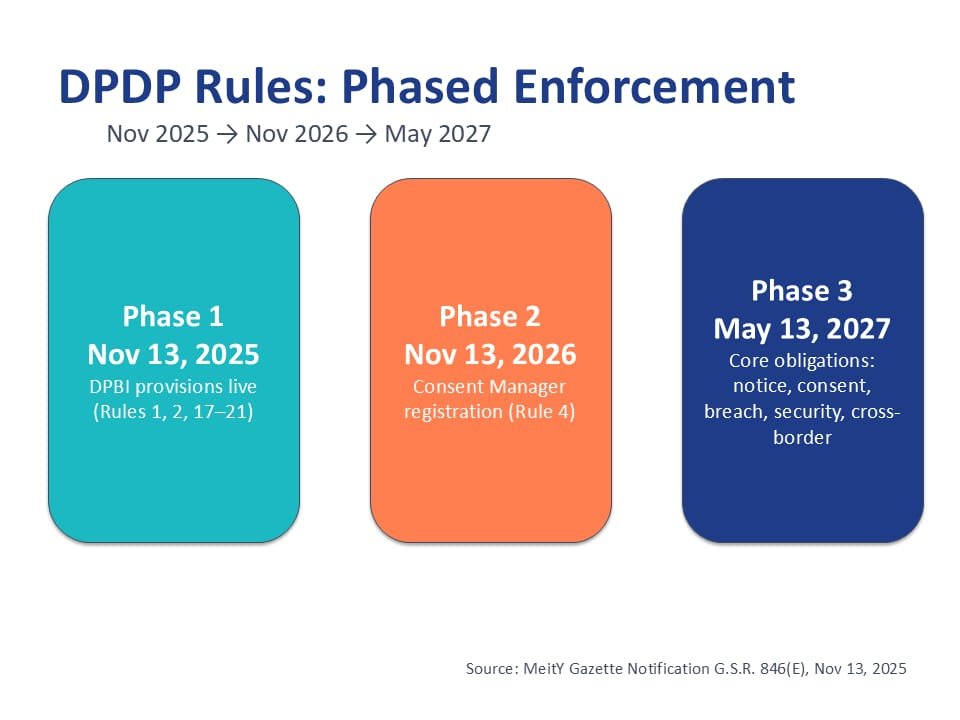
The Government notified the DPDP Rules, 2025 with three milestones—DPBI provisions now, Consent Manager registration next year (Nov 13, 2026), and full obligations by May 13, 2027. For India Inc., that’s regulatory certainty to plan systems, contracts, and teams.
What this means: Boards can resource programmes with confidence; CXOs can sequence capital and delivery; product teams can design consent journeys knowing the end state.
2) Consent Managers: Interoperability at Scale
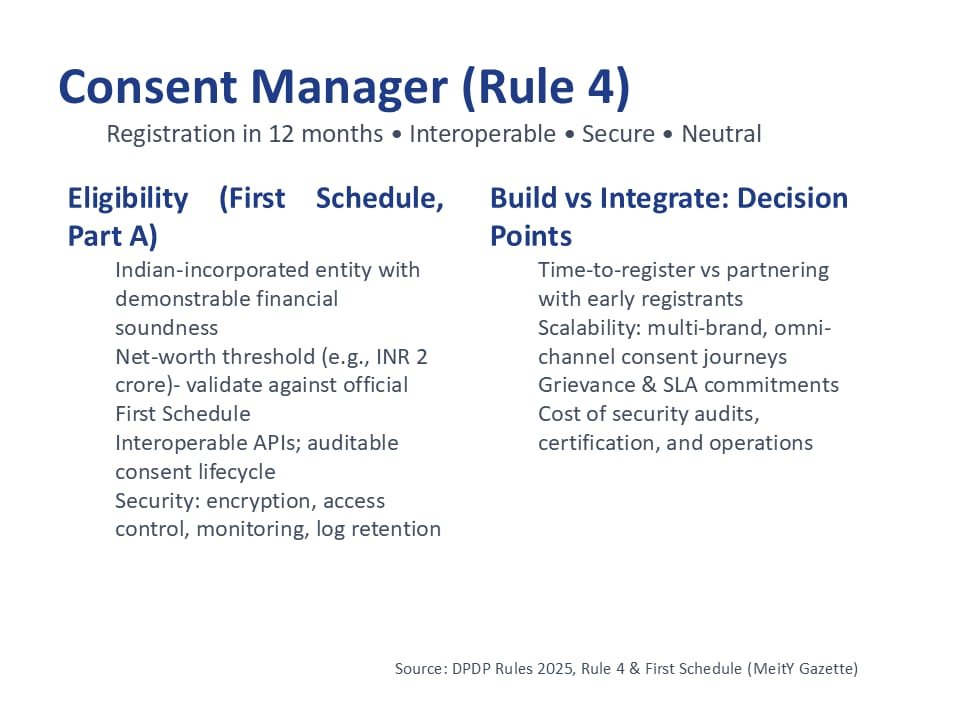
Rule 4 introduces Consent Managers-neutral, registered entities that make consent transparent and interoperable across services. Eligibility sits in the First Schedule, Part A; professional summaries read in a net worth threshold (INR 2 crore) plus platform and security requirements—validate against the official First Schedule and DPBI particulars as published.
Strategic choice: Build in house (if you have scale, engineering muscle, and audit maturity) or integrate with early registrants (to go faster and share operational load). Either way, consent UX becomes a trust differentiator.
3) Cross Border Confidence: Negative List Flexibility
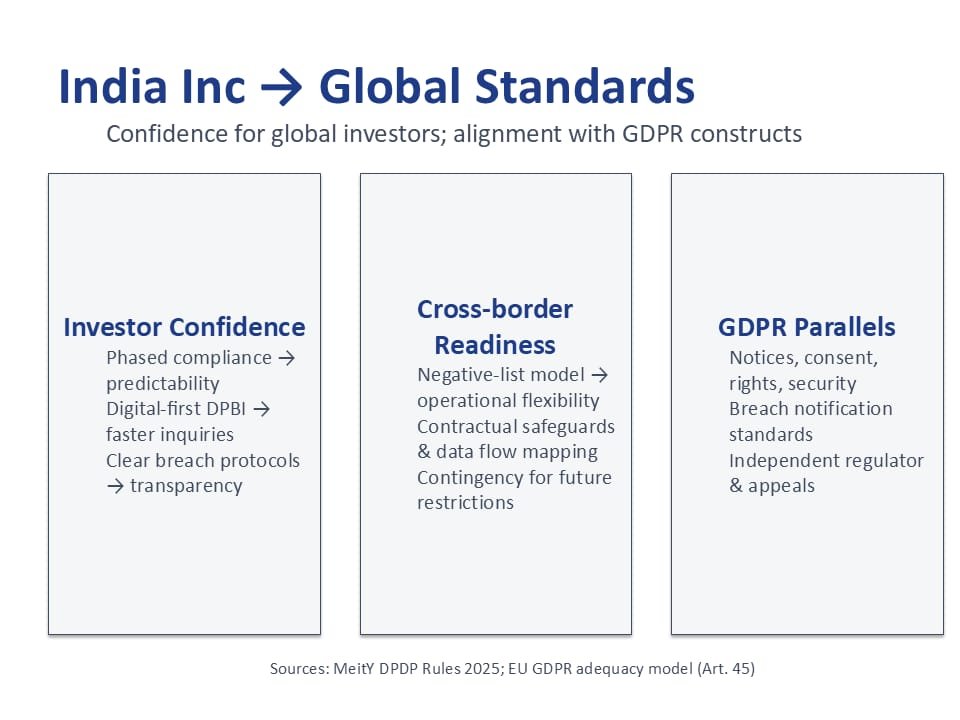
India’s model allows transfers to most jurisdictions unless the Government later restricts specific countries- offering operational flexibility while keeping national interest levers. Design your data flow maps, contractual safeguards, and contingencies in advance.
Global context: The EU uses adequacy decisions (GDPR Art. 45) to enable frictionless flows where protection is “essentially equivalent.” India’s negative list regime can coexist with global architectures while you keep one eye on potential restrictions and investor expectations.
4) India Inc. → Global Standards (GDPR level readiness)
There is conceptual harmony: plain language notices, consent, rights, breach reporting, and security safeguards- all familiar to global teams who have implemented GDPR. This shared vocabulary helps MNCs operate in India and helps Indian enterprises expand abroad.
Outcome: When India Inc. masters DPDP, we show global investors that our risk controls and user trust are aligned with world class norms (GDPR’s adequacy/transfer logic is the benchmark many investors understand).
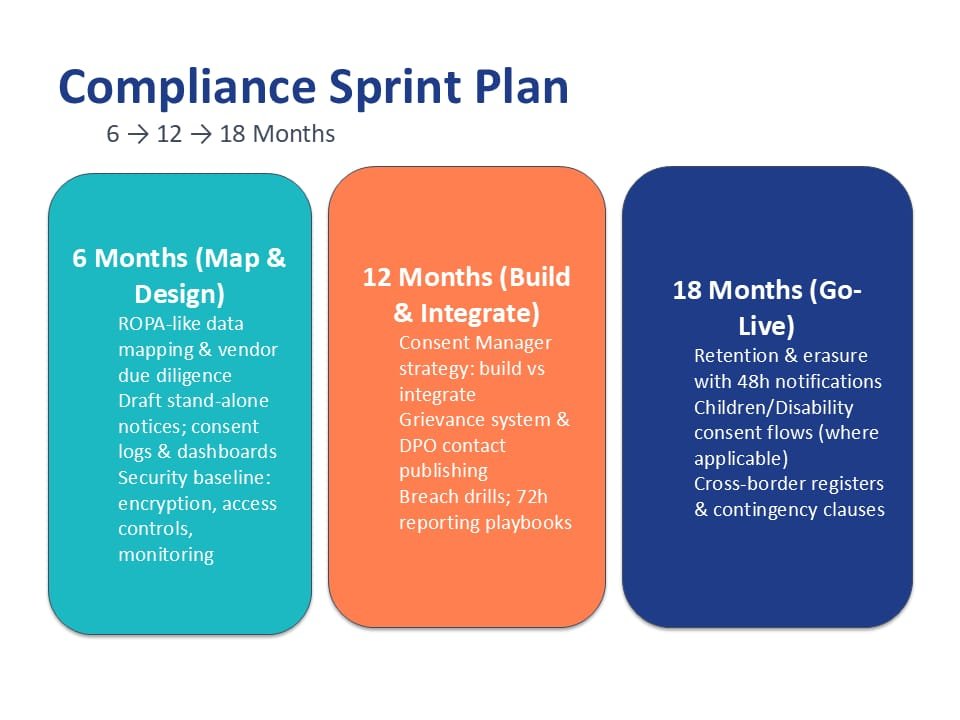
5) Practical Plan: 6 → 12 → 18 Months
- 6 months:Map data (ROPA style), vendor due diligence, stand alone notices, consent logging, baseline security (encryption, access controls, monitoring, 1 year logs).
- 12 months:Consent Manager strategy; publish DPO/contact; drill breach response (notify users promptly and the Board within 72 hours).
- 18 months:Implement retention/erasure with 48 hour advance notifications; children/disability consent flows; cross border registers & contingency clauses.
A Nuanced RTI Note—And a Positive Close
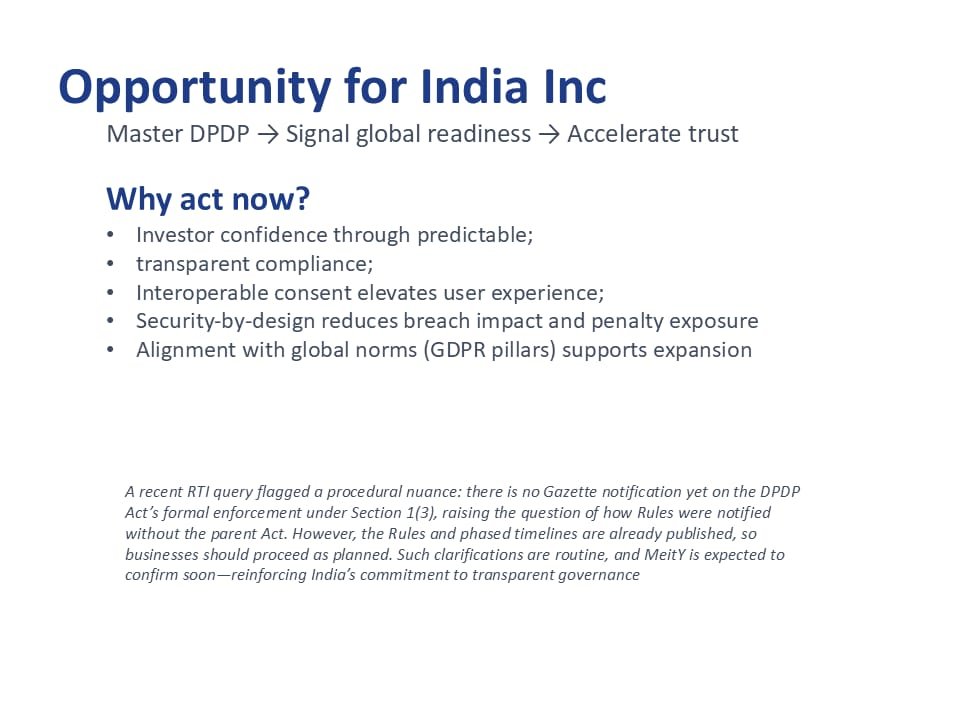
An RTI exchange recently raised a technical question about whether the formal commencement notification for the DPDP Act has been issued under Section 1(3). This is a nuanced procedural point, common in complex legislative frameworks because the Rules and phased enforcement dates are already published in the Gazette and on MeitY’s official portals. For businesses, the practical takeaway is clear: continue preparing on the published roadmap while monitoring for any clarificatory order. These refinements are part of normal regulatory evolution, and I am confident MeitY will soon provide explicit confirmation, ensuring absolute clarity for the industry.